
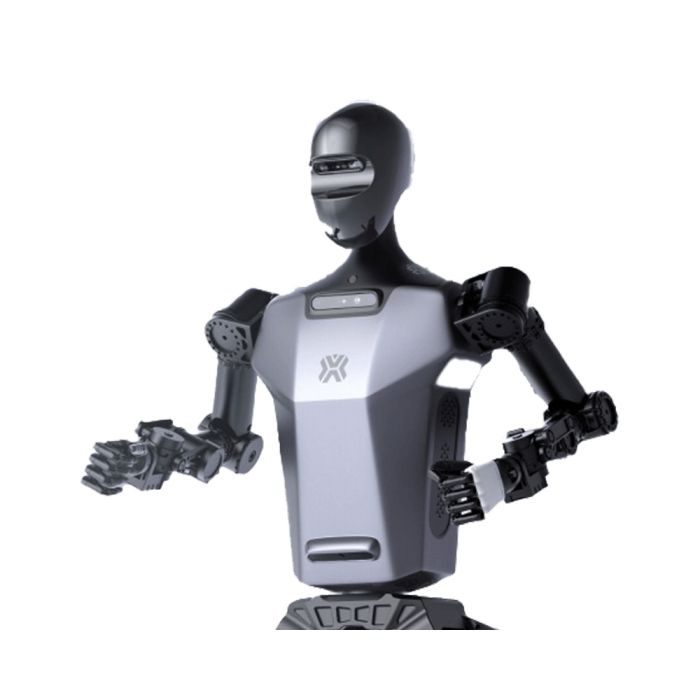
X-Humanoid Tien Kung 2.0 Pro Humanoid Robot (Tien Kung 2.0 Pro)
In stock
- BRAND:
- X-HUMANOID
- PART #:
- Tien Kung 2.0 Pro
- ORIGIN:
- China
- AVAILABILITY:
- SUBJECT TO AVAILABILITY
- SKU:
- X-Humanoid-Tien-Kung-2.0-Pro
Tien Kung 2.0 Pro Humanoid Robot (Tien Kung 2.0 Pro)
The “Pro” label is commonly used in robotics product lines to indicate a higher-tier configuration aimed at professional R&D, advanced integration, and more demanding demonstrations. In the Tiangong/Tien Kung ecosystem, this positioning is reinforced by the availability of official engineering assets—most notably an official Tiangong Pro URDF package (including URDF robot descriptions and STL meshes) intended for use in ROS and Gazebo simulation workflows.
As part of a broader push in China toward embodied AI and general-purpose humanoids, Tiangong/Tien Kung robots have also been publicly showcased in mobility demonstrations and endurance-style events (such as Beijing’s humanoid half-marathon), emphasizing progress in biped locomotion while highlighting ongoing real-world reliability challenges.
Design and Features
Full-size humanoid architecture for embodied AI
Tien Kung 2.0 Pro is positioned as a humanoid platform suitable for whole-body control, dynamic balance, and embodied intelligence experimentation. While many vendors list the model name without a full public datasheet, the Tiangong family is broadly discussed as a full-size, electric humanoid system designed to operate in real environments rather than only controlled lab settings.
Pro-tier developer tooling and simulation readiness
One of the most important design “features” of the Pro model in practice is its integration into a simulation-first development pipeline. X-Humanoid’s open-source page explicitly describes Tiangong Pro URDF (“pro_urdf_publish”) as a package containing complete URDF robot description files and STL mesh files, defining the robot’s mechanical structure, joint limits, and mass distribution—with support for ROS and Gazebo motion planning and control validation.
This matters in humanoid robotics because biped systems are highly sensitive to modeling accuracy: realistic inertia, joint constraints, and collision geometry strongly affect gait stability and controller tuning.
Ecosystem alignment with Open X-Humanoid projects
Beyond URDF files, the broader Open X-Humanoid ecosystem provides practical building blocks for humanoid research and integration. The organization’s published resources describe robot simulation and control development pathways for the Tien Kung family.
For example, TienKung-Lab is described as an RL-based locomotion control framework designed for full-sized humanoid robots and validated on hardware, reflecting an emphasis on natural walking and running behavior development.
“Pro” as a platform tier within the Tiangong family
X-Humanoid distinguishes between Lite and Pro URDF packages, implying multiple tiers within the same platform family.
In many robotics ecosystems, “Lite” tiers serve onboarding and education, while “Pro” tiers prioritize broader capability, higher robustness targets, or deeper integration scope. For buyers, the “Pro” label typically signals a platform intended for serious development work, often with configurable components depending on project requirements.
Technology and Specifications
Official simulation specification (URDF + mesh assets)
Rather than relying only on marketing brochures, a significant portion of the Pro model’s verifiable “specification” is available through its official simulation package. X-Humanoid’s open-source documentation states that the Tiangong Pro URDF includes core parameters such as structure, joint limits, and mass distribution, and it supports ROS + Gazebo simulation-based verification.
Locomotion R&D software infrastructure
For humanoids, locomotion is the primary engineering challenge. Open X-Humanoid describes TienKung-Lab as an RL-based locomotion control system for full-sized humanoid robots, integrating reward strategies intended to produce stable walking and running behaviors and supporting sim-to-sim workflows for transfer.
Public “family context” benchmarks (Tiangong/Tien Kung lineage)
Public reporting around Tiangong robots has referenced mobility targets and performance demonstrations. Reuters has reported that the Tiangong Ultra robot—built by X-Humanoid—can reach roughly 12 kph, and also emphasized the broader intention that humanoids complement human work and handle undesirable or risky tasks.
Reuters also described the half-marathon performance of Tiangong Ultra as winning with a time of 2 hours 40 minutes, enabled by long legs and running algorithms, while noting heavy reliance on engineering support.
These references help frame the program’s mobility priorities, even though “2.0 Pro” may be configured differently depending on customer requirements.
Applications and Use Cases
Embodied AI research and whole-body control
Tien Kung 2.0 Pro is well-aligned with research teams building “embodied” AI systems that connect perception and planning with full-body execution. Pro-tier humanoids are commonly used for:
-
gait and balance research
-
reinforcement learning locomotion experiments
-
sim-to-real transfer and robustness testing
-
human–robot interaction prototypes in real spaces
The availability of a Pro URDF package supports these workflows by enabling simulation validation before deploying algorithms on hardware.
Industrial and logistics pilot demonstrations
Humanoid robots are often evaluated for environments designed around human bodies—doors, stairs, narrow corridors, and human-height work surfaces. Reuters has highlighted that China’s embodied AI push includes use cases such as continuous operation, hazardous environments, and exploration scenarios, positioning humanoids as productivity tools rather than direct replacements for workers.
Education, training, and advanced robotics labs
Universities and advanced training centers increasingly adopt humanoids to teach:
-
robotics control architectures (from low-level joint control to high-level planning)
-
simulation modeling and validation
-
multi-sensor perception stacks and real-time systems
The Pro URDF + ROS/Gazebo compatibility makes the platform particularly relevant for simulation-driven curricula.
Benchmarking and endurance-style validation
High-profile endurance events—like Beijing’s humanoid half marathon—are used to test power systems, thermals, stability, and reliability under real operating stresses. Wired’s report on the event described widespread failures (falls, overheating, breakdowns) and noted that only a subset of robots completed the course, illustrating both the progress and the remaining gap to fully autonomous, robust humanoid performance.
Advantages / Benefits
Official Pro-grade simulation assets accelerate development
The Tiangong Pro URDF package provides a practical advantage: teams can do meaningful engineering work—motion planning, control validation, safety constraint testing—before the robot ever moves in the physical world.
Research ecosystem support via open development tooling
The Open X-Humanoid tooling stack supports modern humanoid development, including locomotion-control frameworks that aim to produce stable walking and running behaviors validated on real robots.
Strong alignment with embodied AI trends
Humanoid robots are increasingly used as “general-purpose” bodies for embodied AI development, where learning-based policies must operate under physical constraints. Tiangong/Tien Kung’s public demonstrations reinforce the program’s mobility-first focus.
Practical pathway from simulation to deployment
The combination of URDF simulation, ROS/Gazebo compatibility, and locomotion R&D projects supports a workflow that is widely considered best practice in legged robotics: simulate → validate → deploy → iterate.
FAQ Section
What is X-Humanoid Tien Kung 2.0 Pro?
Tien Kung 2.0 Pro is a full-size humanoid robot platform under the X-Humanoid ecosystem, offered as a Pro-tier model for advanced R&D, integration, and embodied AI development.
How does Tien Kung 2.0 Pro work?
It operates as a biped humanoid system combining whole-body actuation and control software. X-Humanoid publishes a Pro URDF package (URDF + STL meshes) to support simulation in ROS and Gazebo, enabling motion planning and control verification prior to hardware testing.
Why is Tien Kung 2.0 Pro important?
It supports the shift toward embodied AI, where robots must perform robust behaviors in real environments. The Tiangong program’s public demonstrations and open development tooling reflect ongoing efforts to improve stability, mobility, and practical usability.
What are the benefits of Tien Kung 2.0 Pro for robotics teams?
Key benefits include official Pro URDF simulation assets, compatibility with common robotics development workflows (ROS/Gazebo), and access to open locomotion-control research tooling designed for full-sized humanoid robots.
Summary
The X-Humanoid Tien Kung 2.0 Pro is a Pro-tier humanoid robot platform situated within the Tiangong/Tien Kung ecosystem and Beijing’s embodied AI innovation push. Its most distinctive technical advantage is the availability of an official Tiangong Pro URDF package—complete with STL meshes and core mechanical parameters—designed to support ROS and Gazebo simulation-based development. Combined with open locomotion R&D projects such as TienKung-Lab, the platform supports modern humanoid workflows that emphasize simulation-first validation, iterative control improvement, and real-world mobility benchmarking.
Specifications
| PART # | Tien Kung 2.0 Pro |
|---|---|
| ROBOT TYPE | HUMANOID |
| BRAND | X-HUMANOID |