
Paxini PX-6AX GEN3 Core (PX6AX-GEN3-IP-M2324-Core)
In stock
- PART #:
- PX6AX-GEN3-IP-M2324-Core
- ORIGIN:
- China
- AVAILABILITY:
- SUBJECT TO AVAILABILITY
- SKU:
- Paxini-PX6AX-GEN3-IP-M2324-Core
Paxini PX-6AX GEN3 Core (PX6AX-GEN3-IP-M2324-Core)
It belongs to the PX-6AX GEN3 family, which PaXini positions as a high-precision tactile sensing platform featuring “million-level sampling per second,” industrial-grade durability, IP68 sealing, and fine force perception down to 0.01 N, along with multi-physics interpretation used to model real-world interactions.
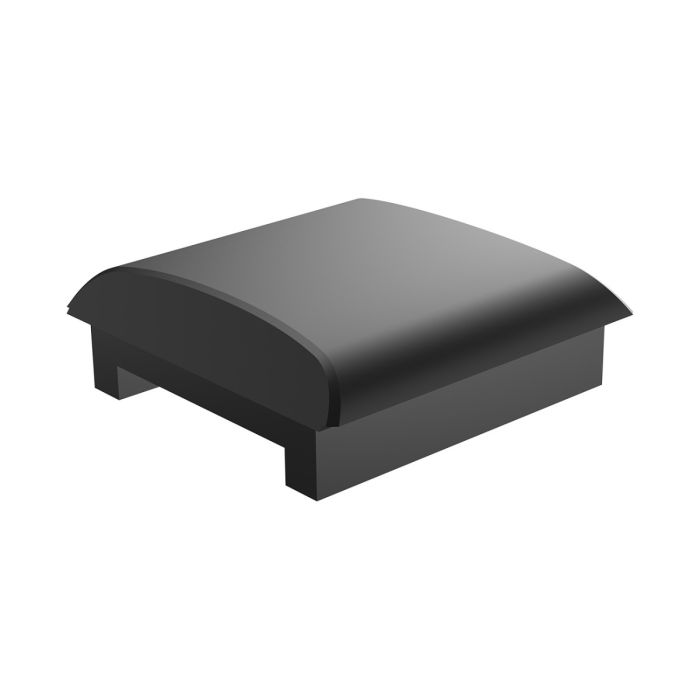
The M2324 Core variant is commonly described as a fingerpad / “finger belly” tactile sensor form factor (“指腹传感器”) and is specified in the PaXini storefront with dimensions 23 × 24 × 8 mm. In tactile manipulation stacks, this size class is typically associated with dexterous hands, grippers, and humanoid end-effectors, where compact placement, sealing, and repeatability are important to support stable grasping, slip-aware control, and safe interaction with objects and people.
Design and Features
Compact, sealed fingerpad form factor
The PX6AX-GEN3-IP-M2324-Core is listed as a Core series GEN3 tactile sensor with a compact geometry (23 × 24 × 8 mm) intended for integration where space is limited, such as robotic fingers or contoured contact surfaces.
Multi-physics tactile interpretation
PaXini describes PX-6AX GEN3 as supporting “15 types of physical analysis” (“15 种物理解析”), emphasizing rich tactile interpretation beyond a single scalar pressure reading. In practice, multi-dimensional tactile sensing is used to infer states such as contact onset, load direction changes, transient slip, and interaction dynamics that are difficult to capture with force-only sensors.
Factory calibration and system consistency
PX-6AX GEN3 is described as factory calibrated (“出厂精标定”) and optimized for consistency and stability, with a published repeatability specification < 0.5%FS (full scale) on PaXini’s GEN3 specifications.
Industrial durability and environmental sealing
PaXini positions GEN3 as industrial-grade with 10 million continuous press cycles (“1000 万次连续按压”) and IP68 dust/water resistance. These characteristics are relevant for robotics deployments where tactile skins may encounter abrasion, cleaning, humidity, or repeated contact cycles.
Technology and Specifications
GEN3 platform specifications (published by PaXini)
PaXini’s PX-6AX GEN3 specifications describe a high-bandwidth tactile measurement pipeline and multi-axis output options, including:
-
Measurement outputs: 3D distributed force array, 3D resultant force, and 3D torque (as supported/selected)
-
Measurement range: normal force 0–25 N; tangential force ±10 N
-
Lifetime: “over 10 million measurements” (industrial durability claim)
-
Sampling frequency (measurement): 1,000,000 Hz
-
Maximum output frequency: 1000 Hz
-
Minimum detectable force: 0.01 N
-
Spatial resolution: 0.1 mm
-
Ingress protection: IP68
-
Anti-interference: “chip-level anti-magnetic” capability
-
Operating voltage: 3–5 V
Model-specific size and series classification (M2324 Core)
Within the PaXini store’s GEN3 Core series listings, PX6AX-GEN3-IP-M2324-Core is presented as a fingerpad sensor (“指腹传感器”) with 23 × 24 × 8 mm dimensions and a listed price point for that SKU grouping.
A common reseller description for this exact part number repeats a concise specification bundle—23 × 24 × 8 mm, “15 types” tactile perception, 1000 Hz output, IP68, 10 million-cycle durability, and 0.01 N precision—aligned with PaXini’s GEN3 platform claims.
Applications and Use Cases
Dexterous robotic hands and humanoid manipulation
Fingerpad tactile sensors are widely used in dexterous hands to improve grasp reliability, detect incipient slip, and support force-controlled manipulation of delicate or irregular objects. GEN3’s high output frequency (up to 1000 Hz) and fine-force threshold (0.01 N) are positioned to support responsive control loops and interaction-rich tasks.
Slip detection and stable grasping in grippers
In industrial grippers, tactile sensing can reduce over-gripping, improve handling of deformable packaging, and increase robustness when object friction varies. PaXini’s “multi-physics analysis” framing is commonly associated with interpreting contact dynamics rather than only static pressure.
Embodied AI data collection and policy learning
Embodied learning pipelines benefit from tactile signals that encode contact state and interaction transitions (e.g., touch → load → micro-slip → slip). PaXini’s emphasis on fast sampling and transient change capture (“敏锐捕捉瞬态变化”) reflects this use case: tactile streams can be logged and synchronized with vision and proprioception for imitation learning, reinforcement learning, or grasp dataset creation.
Field and service robotics in harsher environments
For robots used in service contexts, labs, or semi-industrial environments, IP68-rated tactile modules can be easier to maintain and protect against dust and water exposure. PaXini explicitly markets GEN3 as IP68 and “industrial-grade” in durability.
Advantages / Benefits
High-bandwidth tactile output for responsive control
PaXini lists a maximum output frequency of 1000 Hz, which supports fast tactile feedback loops for grasp stabilization, slip recovery, and contact-rich motion.
Fine force perception for delicate manipulation
The GEN3 platform claims 0.01 N minimum detectable force, a threshold relevant for gentle touches and micro-contact detection—especially helpful when working with thin materials, soft objects, or precision insertion tasks.
Industrial sealing and durability
GEN3’s IP68 and “10 million” durability positioning targets long-life robotic touch surfaces, reducing replacement frequency in iterative research or continuous industrial demonstrations.
Broad fit across sensor geometries within the same platform
PaXini markets PX-6AX GEN3 as offering multiple models and sizes (“12款不同规格型号…全覆盖”), allowing integrators to mix fingertip, fingerpad, and palm coverage while staying within one sensing ecosystem.
FAQ Section
What is Paxini PX-6AX GEN3 Core (PX6AX-GEN3-IP-M2324-Core)?
It is a GEN3 Core-series multi-dimensional tactile sensor from PaXini, in a 23 × 24 × 8 mm fingerpad form factor, designed to provide fine tactile perception for robotic manipulation and embodied intelligence systems.
How does Paxini PX-6AX GEN3 Core work?
PX-6AX GEN3 is presented as a high-resolution tactile platform that can output multi-dimensional force information (including distributed force and resultant/torque-related outputs, depending on configuration) at high update rates—up to 1000 Hz maximum output frequency in PaXini’s published GEN3 specifications.
Why is Paxini PX-6AX GEN3 Core important?
High-resolution tactile sensing helps robots interpret contact events and interaction dynamics that vision and joint sensors may miss. PaXini emphasizes transient change capture and multi-physics interpretation in GEN3, along with fine force thresholds (0.01 N) that support delicate manipulation.
What are the benefits of Paxini PX-6AX GEN3 Core?
Key benefits include a compact 23 × 24 × 8 mm form factor, high update rate capability (up to 1000 Hz output), fine force detection down to 0.01 N, IP68 sealing, and industrial durability positioning around 10 million measurement cycles.
Summary
Paxini PX-6AX GEN3 Core (PX6AX-GEN3-IP-M2324-Core) is a compact 23 × 24 × 8 mm tactile sensor module in PaXini’s third-generation PX-6AX lineup, positioned for dexterous manipulation and embodied intelligence applications that benefit from high-rate, multi-dimensional touch perception. PaXini’s published GEN3 specifications emphasize 1000 Hz maximum output frequency, 0.01 N minimum detectable force, IP68 sealing, and industrial-scale durability, making the M2324 Core a representative GEN3 “fingerpad” option for contact-rich robotics.
Specifications
| PART # | PX6AX-GEN3-IP-M2324-Core |
|---|